Innovating With Artificial Urine For Research And Lab Discoveries

Artificial urine is used in laboratory research to provide stable, repeatable samples for method development, training, quality control, and instrument testing. By controlling pH, specific gravity, and baselines, labs can reduce variability, simplify troubleshooting, and improve repeatability across runs for experimentation.
Labs operate efficiently when key variables remain consistent. Research teams may use standardized fake urine to create an environment they can control with the same solution every time. Using artificial urine for research allows control over pH, gravity, and analyte baselines across runs.
Data becomes cleaner, making it clearer. At Quick Fix®, we provide high-quality, pre-mixed artificial urine formulations designed to deliver consistent pH, specific gravity, and analyze baselines for research, training, and quality-control workflows.
Why Labs May Lean on Synthetic Controls
Real human samples for science research vary due to diets, medications, and collection of other factors that make urine unique when DNA comes into play. Standardized control samples reduce that variability, along with removing the biohazard part of real urine. Teams can stress-test instruments without guessing sample composition.
This controlled loop accelerates method optimization and lowers repetitive work.
What Goes into a Credible Artificial Pee Formula
Effective surrogates capture the critical characteristics that instruments measure. Artificial urine for research maintains consistent pH and specific gravity, aligning creatinine and urea with typical clinical ranges, while conductivity and chloride preserve proper ionic balance.
This makes premium formulated fake urine good enough to use as a real-urine substitute.
Key formulation characteristics include:
- Controlled pH and specific gravity
- Creatinine and urea within defined ranges
- Stable ionic balance
- Realistic viscosity for pipetting and flow
- Visual cues such as color and foaming behavior
A biocide additive that is unique to Quick Fix, helps the fake urine remain stable under standard storage conditions to support consistent results over a 2-year time period.
Applications Across Fields
Real urine surrogates, instead of artificial urine samples, can also support a wide variety of laboratory applications. Providing realistic samples to measure effects from real people after fake urine has helped calibrate the original equipment or chemical reactions previously.
Common use cases that may have used fake urine before using the real urine include:
- Clinical assay validation
- Toxicology extraction and cleanup testing
- Medicine half-life
- Forensic chain-of-custody practice
- Device testing for cups, strips, and sensors
Together, these applications show that repeatable baselines and safer handling enhance workflow reliability and overall efficiency across all fields and phases of the experimental process.
Method Development Made Simpler
Early method development often involves trial and error. The plethora or substitute urine allow scientists to adjust one factor at a time while keeping other conditions constant.
Researchers may use artificial urine to:
- Adjust pH while holding other variables steady
- Spike known analytes to measure recovery
- Repeat testing/measuring
- Map carryover using fixed analyte levels
This structured approach shortens the path to robust, reproducible protocols.
Training and Competency Checks
New staff need hands-on practice. Standardized samples let mentors demonstrate each step clearly. Trainees learn pipetting, labeling, timing, and instrument maintenance on a safe, predictable matrix.
Supervisors can evaluate accuracy against known values while trainees reinforce skills through refresher drills during slower periods. Documenting proficiency runs on stable samples to support audits and strengthen overall staff training.
Quality Control and Lot-to-lot Tracking
Consistency is the foundation of effective quality control. Labs that run daily or weekly checks can detect drift early, and synthetic surrogates support charts with narrow tolerance bands.
Spectrum Labs, the makers of Quick Fix artificial urine, have a batch code system for users to check the validity and freshness of their fake pee. This batch validator tool is rare to see in fake urine brands.
Spectrum Labs can track each of their batches and batch codes that are current and even have years of storage from each batch created in the past due to their commitment to quality assurance and appreciation for recorded data.
Storage, Stability, and Transport of Artificial Pee
Proper temperature management of your artificial urine requires following clear guidelines at the time of use. Labels should indicate optimal temperature ranges and shelf life. For lower quality fake pee, it is not recommended to re-use after opening. Quick Fix Artificial Urine allows users to reheat as many times after opening as long as it has not been poured out.
Caps need to seal tightly to prevent leakage, and transport packaging should cushion samples against shocks. Simple checklists for logging receipts, storage placements, and opening dates help maintain sample integrity and keep data consistent.
Safety and Compliance Notes
Using synthetic matrices lowers biohazard risks and simplifies daily handling, though labs must continue following SOPs for PPE, labeling, and waste management. Proper documentation supports inspections, while certificates of conformance, lot sheets, and batch checks provide verification for every run. All usage should comply with local and federal regulations.
Designing Spiking and Recovery Studies
Validation frequently requires spiking experiments. Begin with a base matrix that reflects your specific use case, then introduce known quantities of target compounds. Perform replicates across low, mid, and high ranges to assess consistency.
Calculate recovery and precision or plot linearity along with detection limits. Carefully document instrument settings and timing throughout the process.
Instrument Stress Testing
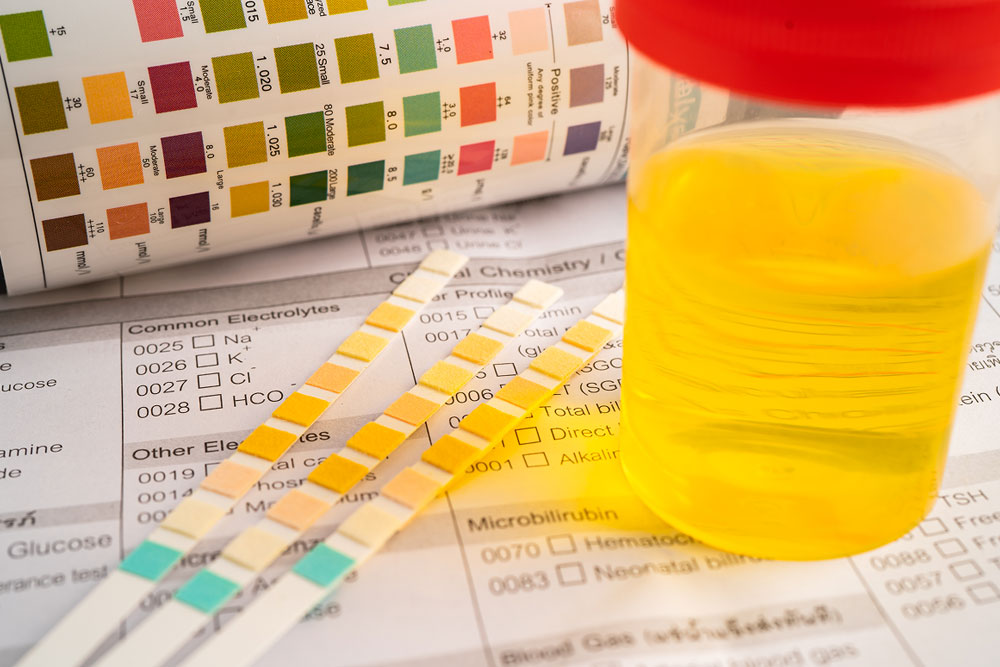
Before bringing in real human urine to test the stress of new medical tools, medicines, or equipment, artificial urine will be the economical choice to use until a baseline is determined.
Picking the Right Urine Surrogate for Your Lab
Choosing the right surrogate depends on laboratory goals.
| Application | Primary Focus |
| Assay validation | Tight analyte targets |
| Training | Handling realism and consistency |
| Device testing | Flow, viscosity, sensor response |
| QC monitoring | Stability and lot tracking |
Reviewing specifications, confirming shelf life, and running pilot studies help ensure suitability before full deployment.
Documentation that Stands Up to Audits
Auditors rely on clear and complete records, so maintaining invoices with dates and storage logs is essential. Attaching spec sheets to each project and retaining quality control charts and monthly trends keeps information organized, while noting any deviations and corrective actions provides full transparency.
Even concise forms are effective if they are thorough. Comprehensive documentation not only streamlines audits but also simplifies staff transitions.
Common Pitfalls and Easy Fixes
Evaporation and air can gradually alter specific gravity, so keeping caps tightly closed and limiting the time samples remain open is essential for maintaining consistency. Heating urine slowly evaporates some of the liquid each time. Temperature fluctuations that are out of normal human temperature range can also shift pH or nitrate levels. This makes the use of stable storage zones and proper heating measures critical for preserving sample integrity.
Following these practical habits not only prevents the most common errors but also helps maintain smooth, reliable laboratory operations and supports accurate data collection over time – even for the odd products such as artificial urine.
Ethics, Messaging, and Public Trust
Consistent and safe surrogates provide reliable data for research, but maintaining public trust remains equally important. Laboratories should publish clear position statements that communicate their commitment to ethical practices and transparency.
Training programs should cover potential misuse risks and reinforce proper interpretation of lab values.
Upholding a strong ethical stance protects both laboratory teams and the integrity of the scientific work they perform, fostering confidence among regulators, collaborators, and the broader public.
How Can We Help Your Program?
Quick Fix® produces stable, reliable formulas for method development, training, and quality control for science, educational, or manufacturing studies. Each batch of Quick Fix® artificial pee matches key lab triggers for real human urine traits such as pH, specific gravity, creatinine, and arrives fresh with clear labeling for confident, consistent use.
Packaging is designed for convenience, with secure caps, small-sized bottles, and easily trackable batch code numbers. Pilot packs allow testing, while larger orders support extended studies. We help labs focus on discovery with our premium and proprietary artificial urine formula.
Call, chat, or shop synthetic urine products online today to see how we can support your program.
Best selling products
-

Quick Fix Plus Synthetic Urine 3 Ounce
$44.95 -
Quick Fix Plus Bundle: Buy 2 Get 1 Free 3 Ounce
Original price was: $135.00.$90.00Current price is: $90.00. -
Quick Fix Pro Belt Kit 4 Ounce
$59.95 -
Quick Fix Max Synthetic Urine 4 Ounce
$49.95